Tired of Family Plans Falling Apart? This Simple Habit Changed Everything
We’ve all been there—juggling school pickups, weekend outings, and dinner plans, only to realize no one’s on the same page. You text, you call, you remind—yet things still slip through the cracks. It’s not about being busy; it’s about working harder than you need to. What if a small shift in how your family uses technology could bring real calm? Not another app overload, but a meaningful habit that actually sticks—and brings you closer. I remember the moment it hit me: standing in the rain outside my daughter’s piano recital, watching the room fill up, while my husband texted, ‘Wait, was this today?’ That wasn’t just a scheduling error. It was a moment of disconnection. And it wasn’t the first time. Like so many of us, we weren’t failing because we didn’t care. We were failing because we were trying to manage a family’s worth of moving parts with tools that didn’t actually work for us. Sound familiar? You’re not alone. But here’s the good news: it doesn’t have to be this way. With one simple, tech-supported habit, everything changed for us. And it can for you, too.
The Chaos of Well-Meaning Families
Let’s be honest—most of us aren’t chaotic because we don’t care. We’re chaotic because we care too much. We want to be at every game, every performance, every parent-teacher conference. We want to cook healthy meals, keep up with laundry, and still have energy to listen when our kids need us. But somewhere between the school calendar email, the dentist reminder, and the text from your sister about Sunday dinner, things fall apart. I once missed my son’s science fair because two different dates were floating around in group chats. No one was wrong—everyone had good intentions. But without a shared system, good intentions aren’t enough. The real cost isn’t just the missed event. It’s the guilt. It’s the frustration. It’s the slow erosion of trust when plans feel unreliable. When your teenager says, ‘You never remember,’ it’s not just about the forgotten soccer game. It’s about feeling unseen. And that emotional toll adds up. You start to feel like you’re failing, even when you’re doing everything you can. The truth is, our families aren’t broken. Our systems are. We’re using tools built for individuals—personal calendars, solo to-do lists, private messages—on a team that needs coordination. No wonder it feels like we’re always playing catch-up.
And it’s not just the big things. It’s the daily friction—the morning chaos because no one knew who had the car, the grocery run you made twice because the list wasn’t shared, the birthday gift bought last-minute because the date slipped through. These aren’t small things when they happen every week. They chip away at your peace. They make family life feel like a series of emergencies instead of a shared journey. I used to think I just needed to try harder. More reminders. More texts. More sticky notes on the fridge. But the problem wasn’t effort. It was alignment. We weren’t on the same rhythm. And without that, even the best intentions scatter like leaves in the wind.
Why Shared Planning Fails (And What Actually Works)
You’ve probably tried shared calendars before. Maybe you created a family Google Calendar, color-coded each person, and sent invites for everything from dentist appointments to grocery shopping. And for a week or two, it worked. Then life got busy. Someone forgot to check. Someone didn’t know how to edit the calendar. Someone thought the event was next week, not this one. And just like that, the system collapsed. Here’s the hard truth: technology alone doesn’t fix broken habits. In fact, adding more tech to a messy routine often makes it worse. It’s not that the tools are bad—they’re just not enough. The real issue isn’t the calendar. It’s the lack of a consistent, shared ritual around it. Think of it like a recipe. You can have the best ingredients in the world, but if you don’t mix them at the right time and in the right way, you don’t get the dish. The same is true for family planning. You need a habit that brings everyone to the table—literally or figuratively—at the same time, with the same purpose.
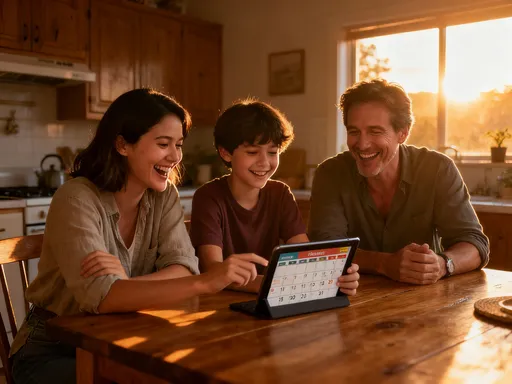
That’s where *habit-layered planning* comes in. It’s not about downloading a new app or overhauling your entire system. It’s about weaving planning into moments you’re already together. For us, it started with Sunday mornings. We always had pancakes. Always. That was our rhythm. So instead of adding something new, we simply added 15 minutes to that time. We called it ‘The Sunday Sync.’ No devices at the table during breakfast—just conversation. But after plates were cleared, we pulled out one phone, opened the shared calendar, and walked through the week together. The key wasn’t the tech. It was the timing. Because we were already gathered, already relaxed, already connected, adding the planning felt natural. It wasn’t another chore. It was part of our ritual. And because it happened at the same time every week, it didn’t require reminders. It just became what we did. That’s the power of habit-layered planning: it works with your life, not against it. It turns coordination from a battle into a quiet, reliable rhythm.
Designing a Family Habit That Sticks
So how do you create a habit like this? First, you don’t impose it. You co-create it. Sit down with your family—yes, even the kids—and ask, ‘When do we feel most connected? When are we already together?’ Maybe it’s Sunday breakfast. Maybe it’s Friday night dinner. Maybe it’s bedtime with the little ones. Find that natural pause in your week and build around it. The habit should feel like an enhancement, not a burden. For us, 15 minutes was enough. We set a timer. One person shared their week—work events, appointments, social plans. Then another. Then the kids. We added everything to the shared calendar as we went. Birthdays, practices, playdates, even grocery runs. We used simple color codes: blue for school, green for sports, pink for family, yellow for chores. No jargon. No complexity. Just clarity. And we let the kids help. My youngest loved tapping the screen to add her dance class. It gave her ownership. She started reminding us when we forgot. That’s the magic—when planning becomes something everyone participates in, not something the ‘responsible adult’ does alone.
The cue matters, too. We always used the same device—a tablet kept in the kitchen. It sat in the same spot, charging every night. Seeing it there was a visual reminder that Sunday morning meant planning time. We also played the same song—something light and cheerful—during our sync. That small sensory cue helped signal to our brains, ‘This is our time.’ Consistency is key. It doesn’t have to be perfect. If you miss a week, it’s okay. But returning to the same time, same place, same routine builds muscle memory. And over time, it becomes automatic. You don’t have to remember to plan. Planning becomes part of how you live. That’s when the real shift happens. You stop reacting to chaos and start moving through your week with quiet confidence. And that confidence? It spreads. It calms the mornings. It reduces the yelling. It makes space for laughter instead of last-minute panic.
Choosing Tech That Fits Your Life, Not Controls It
Now, let’s talk about the tools. I’m not going to recommend some fancy new app you’ve never heard of. In fact, the best tech for family planning is probably something you’re already using. The goal isn’t to add another login or download another program. It’s to use what’s already familiar. For us, it was Google Calendar. Simple. Free. Accessible on any device. We created one shared family calendar and linked it to everyone’s phones. No extra steps. No learning curve. When we added an event during our Sunday Sync, everyone saw it instantly. We turned on notifications for the day before and the morning of each event. Not constant pings—just gentle reminders. And we used the notes section for details: ‘Bring cleats,’ ‘Dad picking up,’ ‘Birthday gift under my bed.’ Small things, but they prevented so many misunderstandings.
Some families prefer WhatsApp. If you’re already in a family group chat, why not use it? You can create a pinned message with the weekly plan or use the calendar feature if your app supports it. The point isn’t the platform. It’s consistency. The tech should feel invisible—like the air you breathe. You don’t notice it until it’s gone. That’s how you know it’s working. I’ve seen families use whiteboards, fridge magnets, even notebooks. And if that works for you, great. But for most of us, digital tools have one big advantage: they go with you. You don’t have to be at the kitchen table to see the plan. You can check from work, from the gym, from the grocery store. That mobility matters. The key is to pick one system and stick with it. Don’t toggle between paper and digital. Don’t have events in three different places. Choose one, make it easy, and let it become your single source of truth. When everyone knows where to look, the mental clutter fades. You stop asking, ‘Did you tell Dad?’ You stop wondering, ‘Is that today or tomorrow?’ You just know.
Turning Plans into Meaningful Moments
Here’s what surprised me most: when the logistics got easier, the moments got richer. I used to show up to my daughter’s recitals stressed—rushing, apologizing, still in my work clothes. Now, I arrive early. I bring flowers. I sit and really watch her. Because I knew the date. Because I planned for it. That small shift didn’t just change my schedule. It changed my presence. I was there, not just physically, but emotionally. And that made all the difference. My son noticed. He said, ‘You remembered my game without me asking. That made me happy.’ That’s when it hit me: planning isn’t just about efficiency. It’s about love. When you remember the small things, you’re saying, ‘You matter. I see you. I’m here for you.’
And it’s not just the big events. It’s the little wins. Last month, we had a family movie night—planned weeks in advance. No last-minute changes. No conflicts. We had popcorn, blankets, and everyone showed up. No one was on their phone. We laughed. We connected. That wouldn’t have happened before. We’d have canceled three times. Or someone would have double-booked. But because it was on the calendar, because we’d all agreed, it felt important. It felt sacred. That’s the ripple effect of good planning: it creates space for what really matters. You stop surviving the week and start savoring it. You remember birthdays without a panic run to the store. You make it to the school play. You have dinner together more often. And over time, those moments become the story of your family. Not the chaos. Not the missed connections. But the times you showed up. The times you were present. The times you proved, without saying a word, that they come first.
Overcoming Slips and Staying on Track
Of course, it’s not perfect. Life happens. We’ve missed our Sunday Sync more than once—vacations, illness, busy weeks. And each time, the calendar got a little messy. Reminders were missed. Confusion crept back in. But here’s what I’ve learned: a habit isn’t broken because you miss it. It’s broken if you don’t return to it. So we created a ‘reconnect night’—usually a quiet evening during the week when we’d sit together, review the week, and reset. No guilt. No blame. Just a gentle restart. I’d say, ‘Hey, we dropped the ball. Let’s try again.’ And we would. And it was always easier the second time. Because the habit was already there. It just needed a nudge.
The key is kindness. Don’t aim for perfection. Aim for progress. Celebrate the weeks you nailed it. Forgive the ones you didn’t. And keep coming back. I’ve found that even a five-minute check-in is better than nothing. Just opening the calendar and saying, ‘What’s coming up?’ can reset the whole week. And when kids see you being gentle with yourself, they learn to be gentle too. My daughter now says, ‘We forgot to sync. Can we do it now?’ That’s ownership. That’s culture. That’s how habits grow roots. It’s not about rigid rules. It’s about resilience. It’s about showing up again, even when you’ve slipped. Because every restart is a quiet act of care—for your family, and for your peace.
The Ripple Effect of a Calmer Family Rhythm
After a year of our Sunday Sync, I can honestly say it’s changed more than our schedule. It’s changed our home. There’s less yelling. Fewer ‘I thought you were picking them up’ moments. Less stress in the mornings. We move through our days with more ease. But deeper than that, there’s more trust. My kids know they can count on us. They know their events matter. They know they’re seen. And that creates a sense of safety—emotional safety—that’s priceless. I’ve also noticed something unexpected: we’re more independent. Because we know the plan, we don’t need to check in constantly. My teenager can manage her own rides. My husband knows when I’m busy. We respect each other’s time. That autonomy strengthens us. It doesn’t pull us apart. It connects us in a different way.
And for me, personally, I feel lighter. I’m not carrying the mental load of remembering everything. I’m not the family’s sole coordinator. We’re a team. That shift—from lone planner to shared rhythm—has given me back time, energy, and joy. I have more space to breathe. More space to listen. More space to just be. That’s the real gift of this habit. It’s not about perfect scheduling. It’s about reclaiming your life. It’s about turning daily chaos into quiet confidence. It’s about building a family culture where everyone feels valued, heard, and connected. So if you’re tired of the constant scramble, I invite you to start small. Pick one moment. One routine. One shared habit. Be kind. Be consistent. And let the connection grow, one calm week at a time. Because you don’t need a miracle. You just need a rhythm. And once you find it, everything else starts to fall into place.