Hearing Aids Investing? Here’s What I Learned as a Total Beginner
Entering the hearing aids market felt overwhelming at first — I had no idea how something so small could carry such big financial potential. With aging populations rising globally, demand is climbing fast. I started digging into companies, tech trends, and patient needs, trying to separate hype from real opportunity. What I found surprised me: steady growth, innovation surges, and overlooked entry points. This isn’t about quick wins; it’s about understanding a quiet but powerful shift in healthcare investing. The market is no longer confined to niche medical supply chains. It’s evolving into a dynamic intersection of health, technology, and consumer behavior — one that rewards informed, patient investors who recognize long-term value over short-term noise.
What’s Driving the Rise of Hearing Aids in Healthcare Markets?
The global demand for hearing aids is not a fleeting trend — it is rooted in deep, structural changes in demographics and public health awareness. According to the World Health Organization, over 1.5 billion people live with some degree of hearing loss, and this number is projected to rise to nearly 2.5 billion by 2050. A significant portion of this growth stems from aging populations, particularly in high-income countries where life expectancy continues to increase. As people live longer, age-related hearing decline becomes more common, creating a steadily expanding base of potential users.
But longevity alone does not explain the full scope of market expansion. Greater awareness of hearing health has also played a crucial role. In past decades, hearing loss was often dismissed as an inevitable part of aging, rarely addressed proactively. Today, public health campaigns, medical guidelines, and even social media have helped reduce stigma and promote early intervention. More individuals now understand that untreated hearing loss can lead to social isolation, cognitive decline, and reduced quality of life — making treatment not just a comfort, but a necessity.
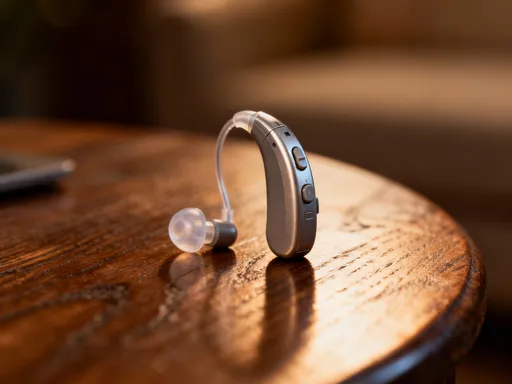
This shift in perception has been amplified by the integration of hearing aids into the broader consumer electronics landscape. Unlike many medical devices that remain hidden or clinical in design, modern hearing aids resemble sleek earbuds. Their aesthetic and functional evolution has helped reposition them as desirable, tech-forward products. This dual identity — as both medical devices and personal tech — allows them to appeal to a wider audience and attract investment from sectors beyond traditional healthcare.
Regulatory developments have further accelerated market access. In the United States, the FDA’s final rule on over-the-counter (OTC) hearing aids, implemented in 2022, marked a turning point. It allows adults with mild to moderate hearing loss to purchase hearing devices directly, without requiring a prescription or audiologist visit. This policy change has lowered barriers to entry, increased competition, and opened new revenue channels for manufacturers. Other countries are watching closely, with some considering similar reforms. These shifts suggest that the market’s growth is not only demographic but also policy-enabled, reinforcing its long-term sustainability.
At the same time, insurance coverage is gradually improving. While hearing aids have historically been excluded from many standard health plans, some public and private insurers are beginning to offer partial or full reimbursement. Medicare Advantage plans in the U.S., for example, increasingly include hearing benefits, enhancing affordability for seniors. These financial supports help convert latent demand into actual purchases, strengthening the commercial foundation of the industry. Together, these factors — aging populations, growing awareness, technological appeal, regulatory reform, and better insurance access — form a powerful convergence that underpins the sector’s investment appeal.
Who’s Winning in the Hearing Aid Industry Today?
The hearing aid industry is shaped by a mix of established medical device giants and agile new entrants, each carving out distinct positions in a rapidly evolving landscape. At the top tier, companies like Sonova, Demant (owner of the Oticon brand), and WS Audiology dominate global market share. These firms have decades of experience in audiological research, strong relationships with healthcare providers, and extensive distribution networks through clinics and audiologists. Their premium product lines, often priced above $3,000 per pair, emphasize clinical accuracy, sound customization, and durability — appealing to consumers who prioritize performance and professional support.
Despite their market strength, these traditional players face increasing pressure from disruption. Consumer electronics companies, most notably Apple and Samsung, have introduced hearing-enhancing features in their wireless earbuds. While not classified as medical devices, products like Apple’s AirPods Pro with Live Listen and hearing test integration offer functional alternatives for mild hearing challenges. These tech giants leverage massive user bases, seamless ecosystem integration, and lower price points to gain traction, particularly among younger users who may delay purchasing traditional hearing aids.
Meanwhile, direct-to-consumer (DTC) startups such as Lexie Hearing and Eargo have emerged with innovative business models. These companies sell FDA-registered hearing aids online, often bundled with telehealth consultations and smartphone apps for self-fitting. By cutting out intermediaries, they offer devices at significantly lower prices — sometimes under $1,000 — while still meeting regulatory standards. Their success reflects a broader trend toward consumer empowerment in healthcare, where convenience, transparency, and cost efficiency are increasingly valued.
Mergers and acquisitions are also reshaping the competitive field. In recent years, private equity firms have shown strong interest in the sector, acquiring smaller brands or consolidating regional players. For instance, private equity-backed firms have merged with hearing aid distributors to create vertically integrated entities capable of controlling everything from R&D to retail. These consolidations can improve economies of scale and accelerate innovation, but they may also reduce competition and limit choices for consumers in the long run.
For investors, this fragmented yet dynamic environment presents both opportunities and challenges. The market leaders offer stability and consistent revenue streams, supported by brand trust and global reach. However, their reliance on traditional distribution channels may slow their adaptation to digital-first trends. Conversely, newer entrants carry higher risk due to limited track records and regulatory exposure, but they offer growth potential through innovation and market expansion. A balanced investment approach might involve exposure to both segments — established firms for stability and emerging players for upside — while monitoring how each navigates the ongoing transformation of the industry.
Why Technology Is Changing the Game for Hearing Devices
Gone are the days when hearing aids were simple amplifiers that made everything louder. Today’s devices are sophisticated wearable computers, packed with sensors, processors, and connectivity features that transform how users interact with sound and their environment. This technological evolution is not just about better hearing — it’s about smarter, more integrated health management. Bluetooth connectivity allows users to stream phone calls, music, and video directly to their ears. AI-powered sound processing can distinguish between speech and background noise, automatically adjusting settings in real time. Some models even monitor physical activity and heart rate, functioning as hybrid health trackers.
These advancements are driving higher adoption rates, especially among tech-comfortable older adults who expect seamless digital experiences. A hearing aid that doubles as a communication hub and wellness monitor feels less like a medical appliance and more like a personal assistant. This shift in perception increases willingness to purchase and use the devices consistently, which in turn strengthens customer lifetime value — a key metric for investors. Companies that lead in innovation are not only improving patient outcomes but also building stronger brand loyalty and pricing power.
However, this rapid pace of innovation comes with financial trade-offs. Research and development costs for next-generation hearing aids have risen significantly. Integrating AI, wireless connectivity, and miniaturized components requires substantial investment in engineering talent, software development, and regulatory testing. For publicly traded companies, this can pressure short-term profitability, especially if new features do not immediately translate into sales growth. Smaller firms may struggle to keep up, creating a barrier to entry that favors well-capitalized players.
Another challenge is the product lifecycle. In the past, hearing aids were replaced every five to seven years, providing predictable revenue. Now, with faster innovation cycles resembling those of smartphones, consumers may upgrade more frequently — but they may also delay purchases, waiting for the next big feature. This volatility makes revenue forecasting more complex and increases competitive intensity. Companies must balance the need to innovate with the need to maintain margins, often through software subscriptions or service bundles that generate recurring income.
From an investment standpoint, the key is identifying which technologies are sustainable and which are fleeting. Features like AI-driven noise reduction and remote tuning via apps have proven durable and widely adopted. Others, such as full integration with smart home systems, remain niche. Investors should look for companies with a clear roadmap, strong IP portfolios, and partnerships with tech or healthcare platforms. Firms that can embed their devices into broader digital health ecosystems — such as linking hearing data to electronic health records or cognitive health apps — are likely to capture more value over time. Ultimately, the winners will be those that treat hearing aids not as standalone products, but as nodes in a connected health network.
How Market Access and Distribution Are Shifting the Profit Model
For most of the 20th century, hearing aids were sold through a closed, professional-led system. Consumers needed to visit an audiologist, undergo testing, receive a prescription, and purchase devices through clinics — a process that ensured quality but also kept prices high and access limited. This model benefited providers and manufacturers alike, allowing them to maintain premium pricing and control over the customer journey. However, it also created friction: long wait times, geographic disparities, and out-of-pocket costs that deterred many from seeking help.
The introduction of over-the-counter (OTC) hearing aids is dismantling this traditional structure. Enabled by regulatory changes, particularly in the U.S., OTC devices allow adults with mild to moderate hearing loss to buy hearing aids directly from pharmacies, online retailers, or electronics stores. This shift has profound implications for the industry’s economics. By cutting out intermediaries, manufacturers can reach consumers more efficiently, reducing distribution costs and expanding market reach. Retailers like CVS and Walmart have already begun stocking OTC hearing aids, signaling mainstream acceptance and scalability.
At the same time, this disruption pressures profit margins. Direct-to-consumer pricing tends to be lower, and increased competition from new entrants drives prices down further. Brands that once commanded $4,000 for a pair of devices now face rivals offering similar functionality for under $800. While volume may increase, the per-unit profit shrinks, forcing companies to rethink their business models. Some are responding by adding value through digital services — such as app-based hearing tests, remote support, and personalized sound tuning — which can be monetized separately and create recurring revenue streams.
Telehealth is also playing a growing role. Virtual consultations with audiologists or hearing specialists allow users to get guidance without in-person visits, blending the convenience of DTC with the credibility of professional oversight. This hybrid model appeals to consumers who want autonomy but still seek expert input. For investors, companies that successfully integrate telehealth into their offerings may achieve a competitive edge by combining accessibility with trust.
The rise of e-commerce further accelerates these changes. Online sales platforms enable rapid scaling, global reach, and rich customer data collection. Firms that master digital marketing, user experience, and post-purchase engagement can build strong direct relationships with customers — a valuable asset in an increasingly personalized market. However, this also means that success depends on more than product quality; it requires expertise in logistics, customer service, and digital strategy. Investors should assess not only a company’s technology but also its operational capabilities in this new retail environment.
Where Are the Hidden Risks in This Growing Market?
Despite the strong fundamentals, investing in the hearing aid sector carries risks that are often overlooked in the enthusiasm for growth. One major concern is regulatory uncertainty. While the U.S. has established a framework for OTC hearing aids, other countries have not yet followed suit, and rules may change over time. Future regulations could impose stricter safety requirements, limit device capabilities, or alter classification standards — all of which could affect product development timelines and market access. Companies operating globally must navigate a patchwork of regulations, increasing compliance costs and operational complexity.
Reimbursement policies also vary widely, creating uneven adoption incentives. In countries with universal healthcare, hearing aids may be partially covered, but wait times and eligibility criteria can limit uptake. In others, out-of-pocket costs remain high, making affordability a persistent barrier. Even in markets with improving insurance coverage, reimbursement levels may not keep pace with device prices, squeezing consumer budgets. These disparities mean that growth is not uniform across regions, requiring investors to carefully evaluate geographic exposure.
Another underappreciated risk is patient hesitation. Studies show that the average person waits seven to ten years between noticing hearing loss and seeking treatment. Cost is a factor, but so is stigma. Many still view hearing aids as symbols of aging or decline, leading to delayed adoption. While design improvements have helped, cultural attitudes evolve slowly. This behavioral lag can suppress demand, even when supply and access improve. Investors must recognize that market potential does not automatically translate into immediate sales.
Technological obsolescence is also a real threat. The same innovation that drives growth can render products outdated quickly. A company that leads today with advanced AI features may fall behind in two years if it fails to innovate further. This rapid cycle increases R&D pressure and makes long-term planning difficult. Smaller firms without deep financial reserves may struggle to survive, while larger ones face the challenge of managing multiple product lines and software platforms.
Finally, competition is intensifying from unexpected quarters. Consumer electronics companies, while not yet dominant in the medical space, have vast resources and brand loyalty. If regulatory pathways expand to allow more advanced features in non-medical devices, the boundary between hearing aids and smart earbuds could blur further — potentially disrupting the entire market. Investors should remain cautious about overvaluing current leaders without considering the threat of substitution.
Which Investment Approaches Make Sense for Beginners?
For those new to the sector, diving directly into individual stocks can be risky. The hearing aid market includes a mix of medical device firms, consumer electronics giants, and emerging DTC brands — each with different risk profiles, growth trajectories, and valuation metrics. Without deep industry knowledge, it’s easy to misjudge a company’s prospects or overestimate its competitive advantage. A more prudent approach for beginners is to gain exposure through diversified financial vehicles, such as exchange-traded funds (ETFs) focused on medical devices, healthcare innovation, or aging populations.
These ETFs offer instant diversification across multiple companies, reducing the impact of any single firm’s underperformance. For example, funds that track indices like the S&P Global Healthcare Sector or specialized biotech and med-tech ETFs often include leading hearing aid manufacturers alongside other medical technology firms. This broad exposure allows investors to benefit from sector-wide growth without betting on one particular player. Additionally, many of these funds are managed with low expense ratios and transparent holdings, making them accessible and easy to monitor.
For those interested in individual stocks, a conservative strategy is to focus on companies with strong balance sheets, consistent revenue growth, and a history of R&D investment. Firms that generate steady cash flow and operate in regulated markets tend to be more resilient during economic downturns. Look for businesses with global reach, proven distribution channels, and a clear innovation pipeline. Avoid speculative stocks with unproven products or excessive debt, as they carry higher risk of volatility or failure.
Patience is essential. Unlike speculative tech sectors that promise rapid returns, healthcare investing often rewards long-term commitment. Regulatory approvals take time, product adoption is gradual, and market shifts unfold over years. Investors should align their expectations with this reality, avoiding the temptation to chase short-term gains. Regular research, staying informed about regulatory changes, and reviewing portfolio performance can help maintain discipline and improve decision-making over time.
Looking Ahead: The Long-Term Outlook for Hearing Health Investing
The future of hearing health extends far beyond amplifying sound. It is increasingly linked to broader issues of cognitive function, independence in aging, and overall well-being. Research continues to show a strong connection between untreated hearing loss and conditions like dementia, depression, and social isolation. As this evidence grows, the economic and social case for early intervention becomes more compelling. Governments, insurers, and employers may begin to view hearing care not as a luxury, but as a cost-saving preventive measure — one that supports workforce participation, reduces healthcare burdens, and improves quality of life.
Investment opportunities are likely to expand beyond traditional hearing aids into adjacent areas. Hearing loss prevention, for instance, could become a growing field, with companies developing noise-monitoring apps, protective wearables, or educational programs. Diagnostic tools that enable early detection — such as smartphone-based hearing tests or AI-powered screening — may also gain traction. Integration with smart health platforms could allow hearing data to inform broader health assessments, creating new value streams for tech-enabled providers.
For investors, this broader vision offers a chance to participate in a meaningful transformation. The hearing health market is not just about selling devices — it’s about enabling people to stay connected, active, and independent as they age. This social impact, combined with solid financial fundamentals, makes it a rare opportunity where purpose and profit can align. While challenges remain, the long-term trajectory is clear: demand will grow, technology will advance, and access will improve. Those who invest with patience, diligence, and a focus on sustainable innovation are likely to see both financial returns and the satisfaction of supporting essential health solutions that improve lives.